Asking for Help and Getting Directions
How to ask locals for directions without panic. Includes understanding their answers and handling the follow-up questions you didn’t expect.

Why Asking for Directions Feels Different in Spanish
Here’s the thing — when you ask for directions in your native language, you’re used to understanding the answer on the first try. But in Spanish? You might get a response that’s way faster, uses gestures you don’t recognize, or includes landmarks you’ve never heard of. That’s totally normal.
The good news is that Canadians are generally patient with travelers, and Spanish speakers in Canada tend to be genuinely helpful. Most locals won’t mind repeating themselves or speaking more slowly if you ask. The real trick isn’t memorizing every direction phrase — it’s knowing which questions to ask and how to respond when you don’t catch the full answer.
The Three Questions That Actually Work
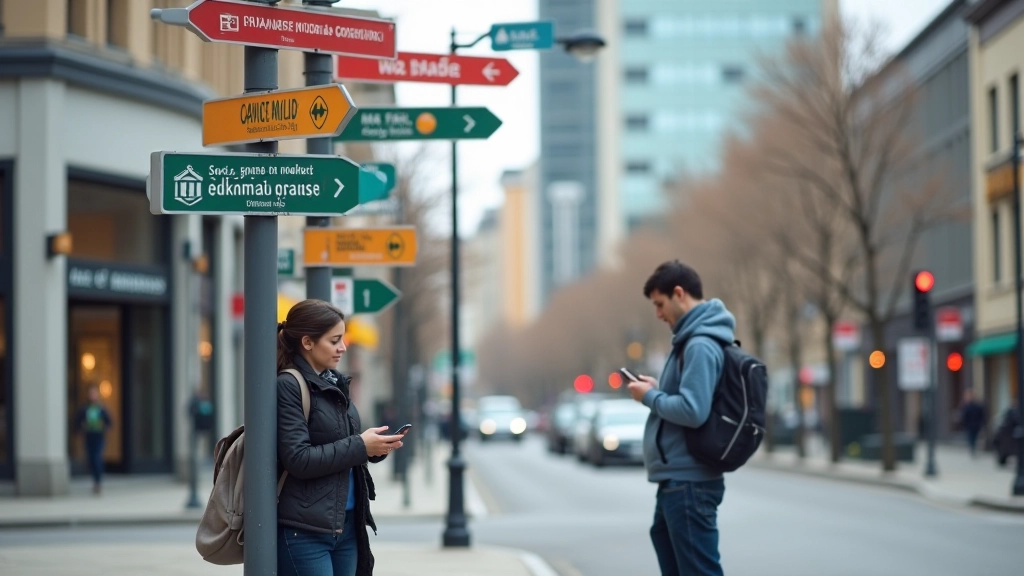
Forget memorizing complicated directional phrases. You really only need three solid questions, and once you master them, you’ll feel way more confident. These are the phrases locals hear all the time, so they won’t slow down their speech or treat you like you’re lost.
“Dónde está…?”
(Where is…?)
The most basic and most useful. You’ll use this constantly. After they answer, the next question is almost always the important one.
“Es lejos o cerca?”
(Is it far or close?)
This gives you a sense of scale. “Lejos” means far, “cerca” means close. Knowing whether you need a 5-minute walk or a 20-minute walk changes everything about how you plan your route.
“Puedo ir a pie?”
(Can I walk there?)
This tells you whether you should be walking or need to take transit. If someone says “no” to this one, you’ve just saved yourself a frustrating hour of wandering.

Understanding the Response (When It Comes Fast)
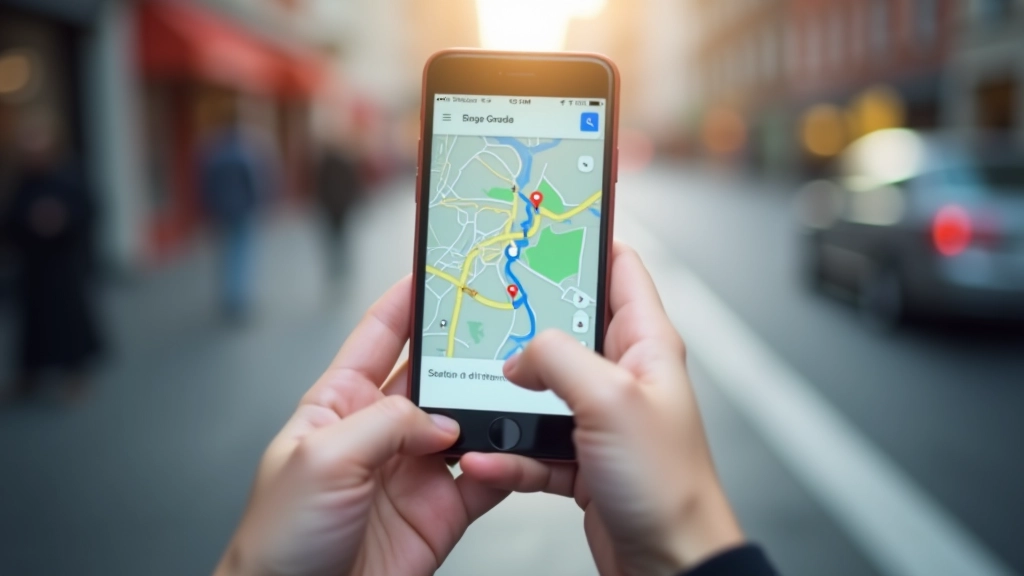
Okay, so you’ve asked the question. Now the local responds — and they’re talking at normal speed, throwing in words you don’t recognize, and using hand gestures you’re trying to decode. Don’t panic. You don’t need to understand every single word.
Focus on listening for these key words instead. You’re not trying to become fluent in that moment — you’re just trying to catch the essential information. “Derecha” means right, “izquierda” means left, “recto” means straight. Those three will get you 80% of the way there.
Pro tip: If someone’s talking too fast, it’s completely fine to raise your hand slightly and say “Más lentamente, por favor” (more slowly, please). Most people will immediately adjust their speed without any frustration.
The tricky part? They might give you landmarks instead of street names. “You’ll see a red building” or “There’s a coffee shop on the corner.” That’s actually helpful — landmarks are often easier to spot than reading street signs when you’re stressed. Just ask “Qué veo?” (What will I see?) if they’re using landmarks and you want to know what to look for.
Real Scenarios You’ll Actually Face
Here’s what happens when things don’t go according to plan
You Walk Past Your Destination
It happens. You were looking at your phone or the street got busier and you missed the turn. Don’t keep walking in circles. Stop someone else and ask “Perdí [location]” (I lost [location]) or show them a photo/address on your phone. Most people will recognize a photo or a business name faster than they can describe directions again.
They Ask You A Question Back
Someone might ask “De dónde eres?” (Where are you from?) or “Primera vez aquí?” (First time here?). This isn’t a trap — they’re just being friendly. You can answer briefly or say “Soy turista” (I’m a tourist). This actually builds rapport and makes people more patient with you.
You Genuinely Don’t Understand
Sometimes the accent is thick or they’re speaking quickly about something complex. It’s totally okay to say “No entiendo” (I don’t understand) and ask them to write it down or show you on your phone’s map. Or ask “Puedo tomar una foto?” (Can I take a photo?) and photograph their hand gestures or the direction they’re pointing.
Building Real Confidence (Not Fake Confidence)
Here’s what actually builds confidence with directions: repetition and small wins. The first time you ask for directions in Spanish and successfully find the place? That’s huge. The second time? You’ll remember what worked and try it again. By the fifth time, you’re not even thinking about it anymore.
Start in lower-stakes situations. Ask for directions to a café or a park before asking for directions to an important appointment. That way, if you get a bit lost, it’s not a crisis. You’re just taking a scenic route to your coffee.
The Reality Check
Even native Spanish speakers sometimes get lost. Canadians get lost. People with GPS get lost. Getting a bit turned around doesn’t mean you’re bad at Spanish or bad at traveling. It means you’re human. Take a breath, look at your map, and ask someone else. That’s literally what everyone does.

Practical Tools Before You Leave
Set yourself up for success
Download Google Maps Offline
Download the areas you’ll visit before you go. Even if your data runs out, you’ll have a map. You can still ask “Estoy en el camino correcto?” (Am I on the right path?) and show someone your offline map.
Write Down Key Addresses
Hotels, restaurants, attractions — have them written down or saved as photos. You can show them to anyone instead of trying to pronounce a street name you’re unsure about. A photo is worth a thousand words (or a thousand mispronunciations).
Prepare Phrases in Advance
Write down the three main questions we covered. Have them in your phone or notebook. You don’t need to memorize everything — you just need to know where to find it when you need it.
Say Thank You (Always)
“Gracias” goes a long way. If someone spends two minutes helping you find your way, they’ve genuinely helped you. A sincere thank you — and even a smile — makes them remember you as the polite traveler, not the confused one.
You’ve Got This
Asking for directions in Spanish feels awkward at first. That’s completely normal. But here’s what you’ll discover: most people are kind, and most people actually enjoy helping travelers find their way. Your effort to speak Spanish — even imperfectly — is genuinely appreciated.
Start with the three questions. Listen for the key direction words. Ask for clarification when you need it. And remember that getting a little lost isn’t failure — it’s just part of traveling. You’re building real skills and real confidence, one conversation at a time.
Ready to practice? Start with café trips and work your way up to more complex destinations. You’ll be navigating like a local before you know it.
Educational Note
This article provides educational guidance on asking for directions in Spanish-speaking environments in Canada. Actual interactions may vary based on individual situations, local customs, and personal communication styles. Always use common sense when traveling, keep emergency numbers saved, and consider using translation apps as backup tools. This content is meant to build confidence and general communication skills, not as a substitute for local knowledge or professional travel guidance.